
Russ Grayson
The garden
How to make a food garden without digging
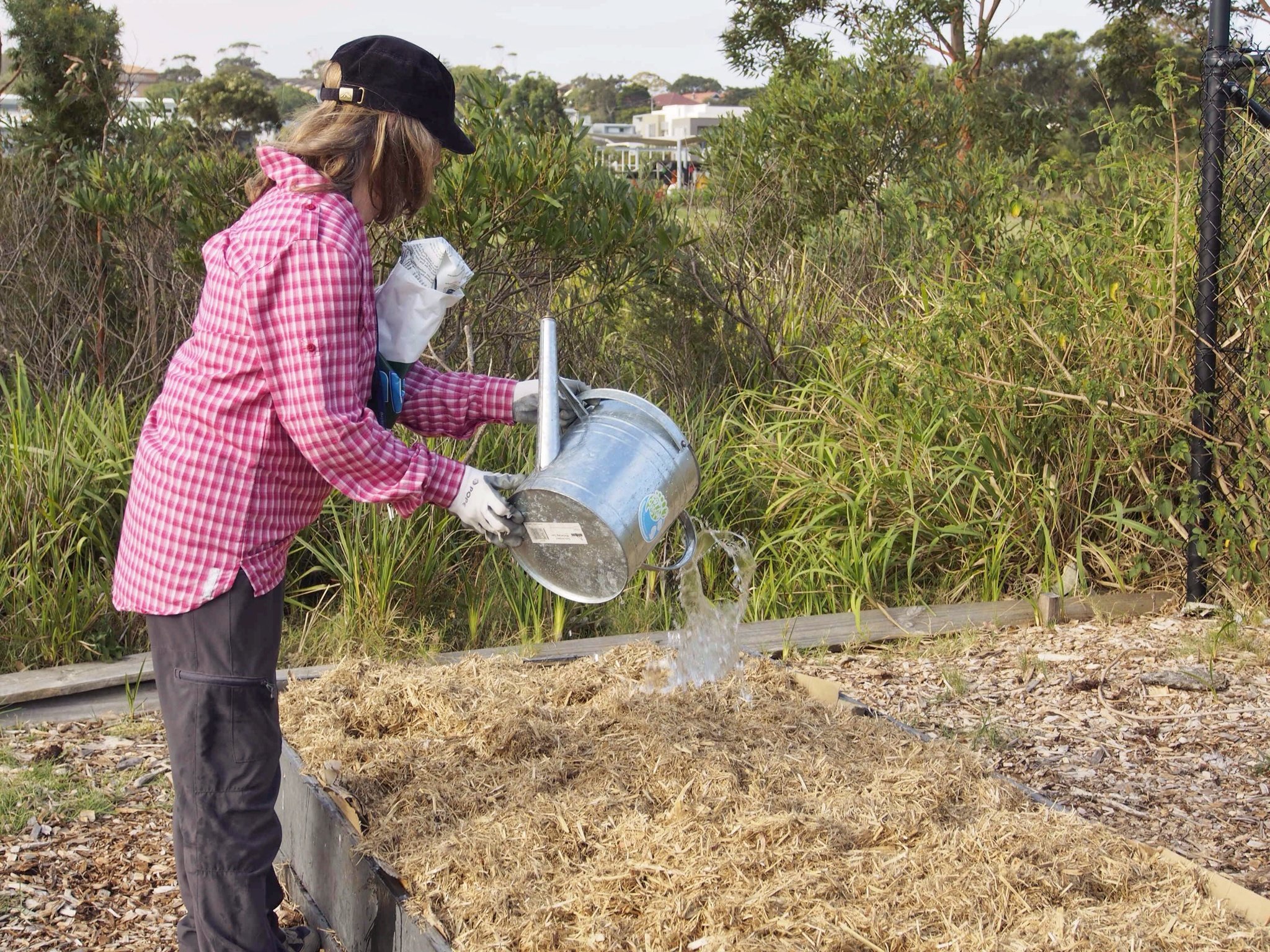
Watering the mulch layer.
Now, it was time to plant the seedlings. There are a couple ways people do this. One is to take a knife, push a small patch of mulch aside, make a slit into the cardboard/newspaper weed barrier, open it a little and make a little hole below that is filled with a handful of compost into which the seedling or seed is planted. The mulch is then bunched around the seedling. The other way is to make a hole in the mulch, fill it with compost and plant the seed or seedling into it.
Finally, the new garden is given a thorough watering.
VARIATIONS
There are variations to this garden construction technique. Depending on the fertility of your soil, fertiliser can be spread over the soil before laying the first compost layer and weed barrier or it can be spread onto the weed barrier before compost is added.
It is important to regularly water your new garden. Soon, you will see the thick mulch layer compact down. Eventually, the paper or cardboard weed barrier will start to decompose to become organic material that can be taken up by the growing plants.
THE COURSE
The organic gardening course consists of six afternoon meetings, usually on a Saturday though the course is sometimes offered on week days.
Bookings are through the City East Community College http://www.cityeastcc.com.au
Now, it was time to plant the seedlings. There are a couple ways people do this. One is to take a knife, push a small patch of mulch aside, make a slit into the cardboard/newspaper weed barrier, open it a little and make a little hole below that is filled with a handful of compost into which the seedling or seed is planted. The mulch is then bunched around the seedling. The other way is to make a hole in the mulch, fill it with compost and plant the seed or seedling into it.
Finally, the new garden is given a thorough watering.
VARIATIONS
There are variations to this garden construction technique. Depending on the fertility of your soil, fertiliser can be spread over the soil before laying the first compost layer and weed barrier or it can be spread onto the weed barrier before compost is added.
It is important to regularly water your new garden. Soon, you will see the thick mulch layer compact down. Eventually, the paper or cardboard weed barrier will start to decompose to become organic material that can be taken up by the growing plants.
THE COURSE
The organic gardening course consists of six afternoon meetings, usually on a Saturday though the course is sometimes offered on week days.
Bookings are through the City East Community College http://www.cityeastcc.com.au
NO DOUBT ABOUT IT — if you want to grow tasty, fresh food, you need a garden.
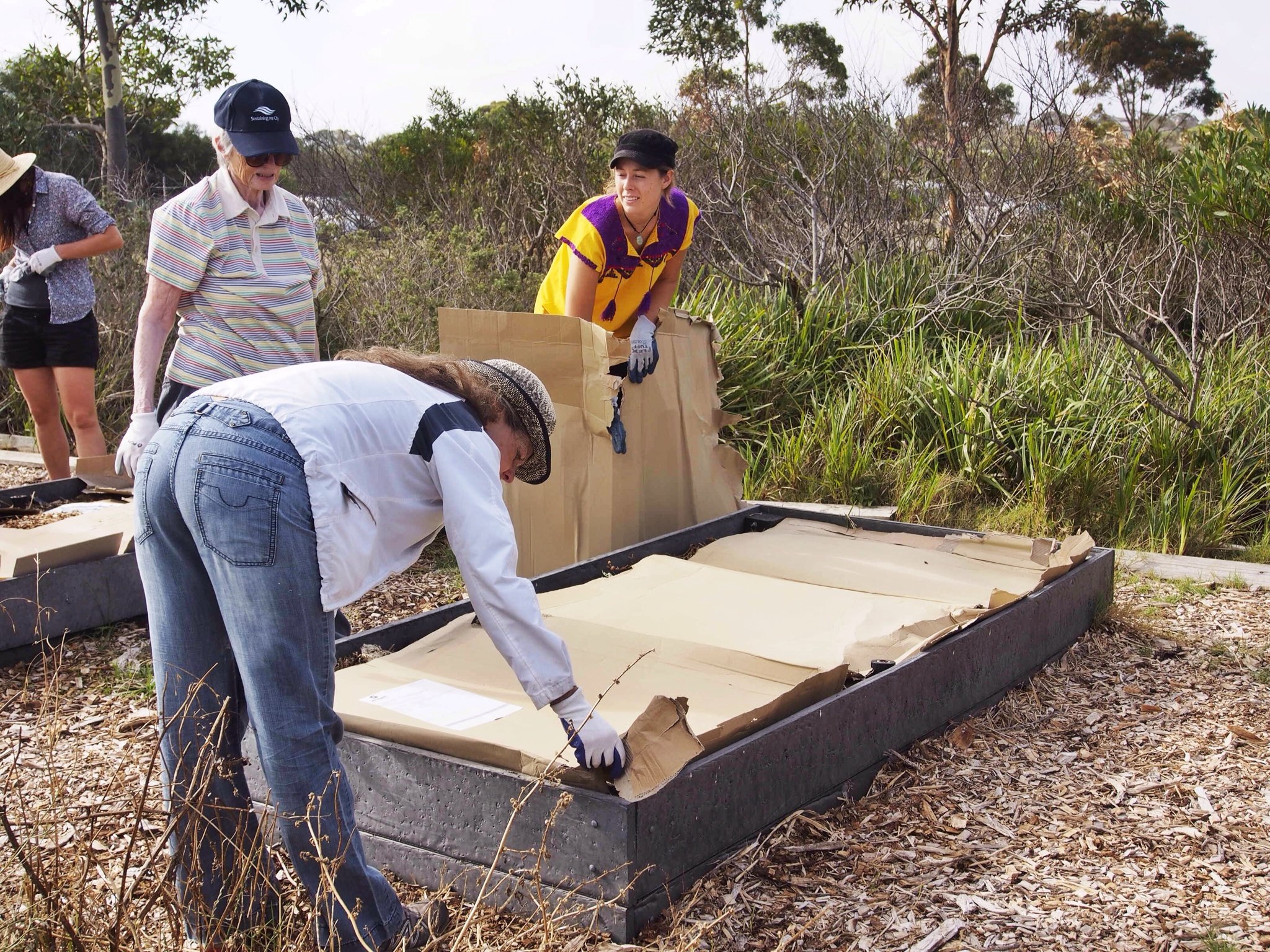
You can build a small one wherever there's space, and if you think carefully about what you eat and plant you can get a range of veges and herbs through the year. That's what these participants, that you see in the photos, in the Randwick Council organic gardening class were learning to do.
THE COURSE
The course has been offered by council for the good part of a decade and it continues to attract people including those from other Sydney Eastern Suburbs council areas as well as the City of Sydney and, sometimes, the Inner West.
The focus of the course is small, intensively-managed gardens, as many people in the Eastern Suburbs live in apartments or single family dwellings with small backyards. Growing space can be limited.
You can build a small one wherever there's space, and if you think carefully about what you eat and plant you can get a range of veges and herbs through the year. That's what these participants, that you see in the photos, in the Randwick Council organic gardening class were learning to do.
THE COURSE
The course has been offered by council for the good part of a decade and it continues to attract people including those from other Sydney Eastern Suburbs council areas as well as the City of Sydney and, sometimes, the Inner West.
The focus of the course is small, intensively-managed gardens, as many people in the Eastern Suburbs live in apartments or single family dwellings with small backyards. Growing space can be limited.
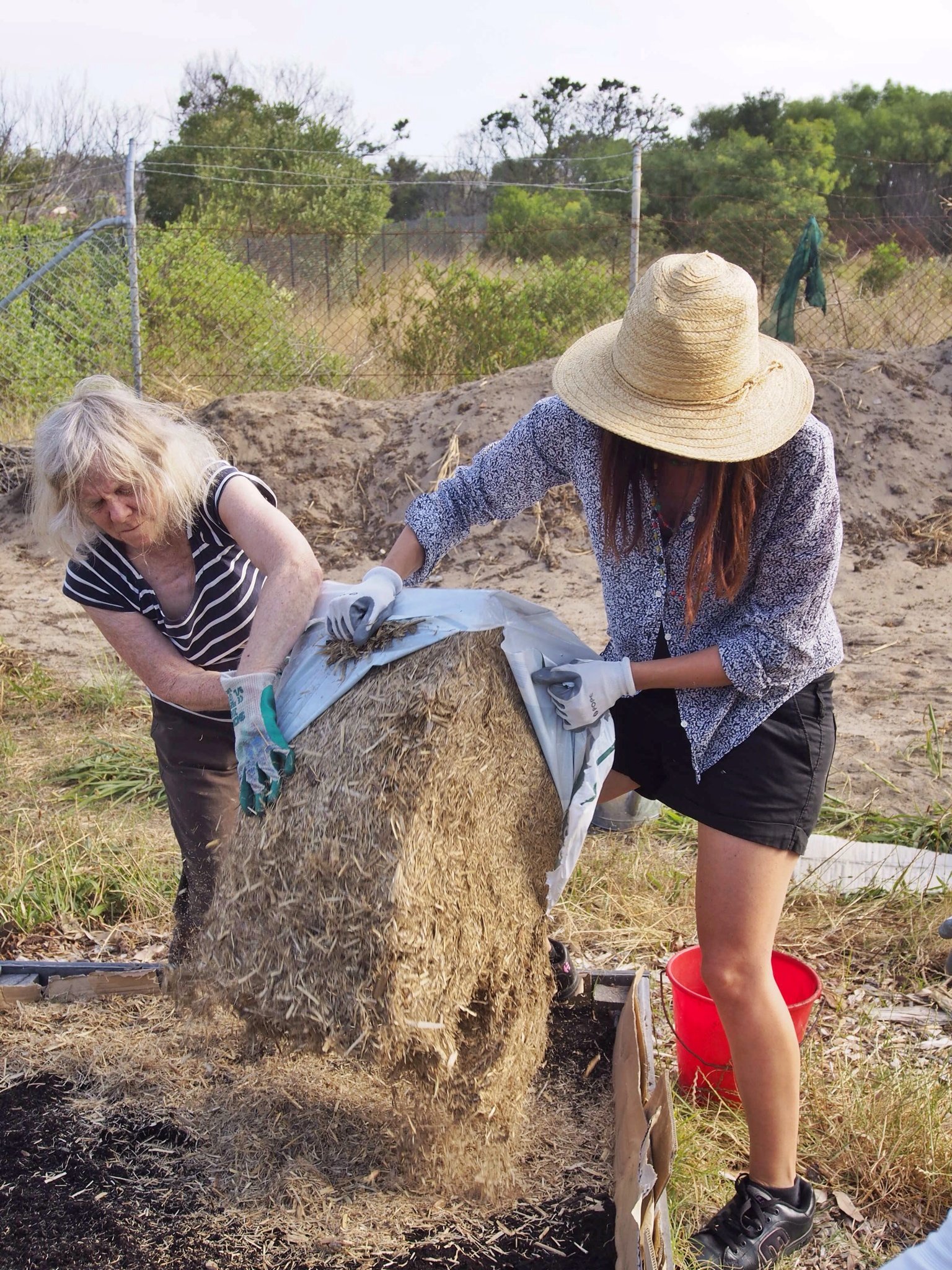
After spreading the compost and watering it, it was time to mulch the garden.
Bales of hay were opened and built into a layer to perhaps ten centimeters deep. This soon compacts into a thinner layer.
Organic sugar cane mulch was used, however there are a range of hays suitable for use as mulch, including lucerne hay that contains the nitrogen needed to make plants grow well.
Bales of hay were opened and built into a layer to perhaps ten centimeters deep. This soon compacts into a thinner layer.
Organic sugar cane mulch was used, however there are a range of hays suitable for use as mulch, including lucerne hay that contains the nitrogen needed to make plants grow well.
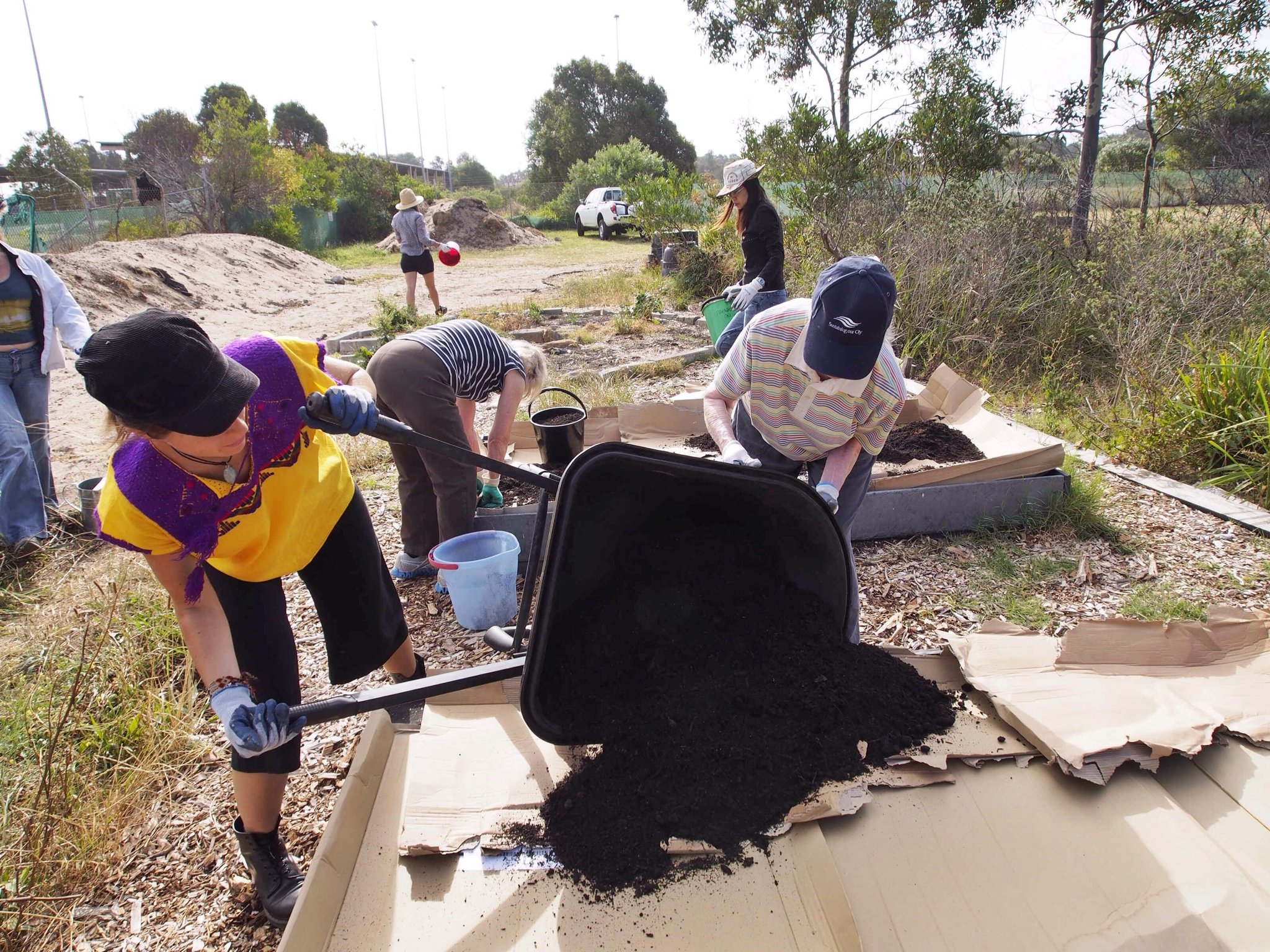
Compost is spread over the garden, thoroughly covering the cardboard weed barrier.
CONSTRUCTION
The lesson was in making a no-dig garden that, just as a lasagne is made up of layers of different foods, the garden is made up of different layers of plant food and mulch.
There are other methods of making vegetable gardens that work well, such as the dig-and-loosen method where the soil is dug and turned to a spade depth and the soil level below is loosened with a garden fork so that air, water and moisture can penetrate. If the soil is compacted where you plan to make your garden it's a good idea to loosen it by pushing a garden fork in as far as it will go, then rocking it back and forth to loosen, but not turn, the soil.
The first thing to do was to clean out the garden, removing any opportunistic plants that had started to colonise the garden bed as well as remnant vegetables from the last class.
Next, a layer of compost a centimeter or so thick was spread over the soil surface to provide nutrients to the vegetables that would be planted. This was watered thoroughly.
Before this, the trainer suggested any participants with breathing difficulties, such a asthma, wear one of the dust masks provided to avoid breathing in fine particles from the compost and straw.
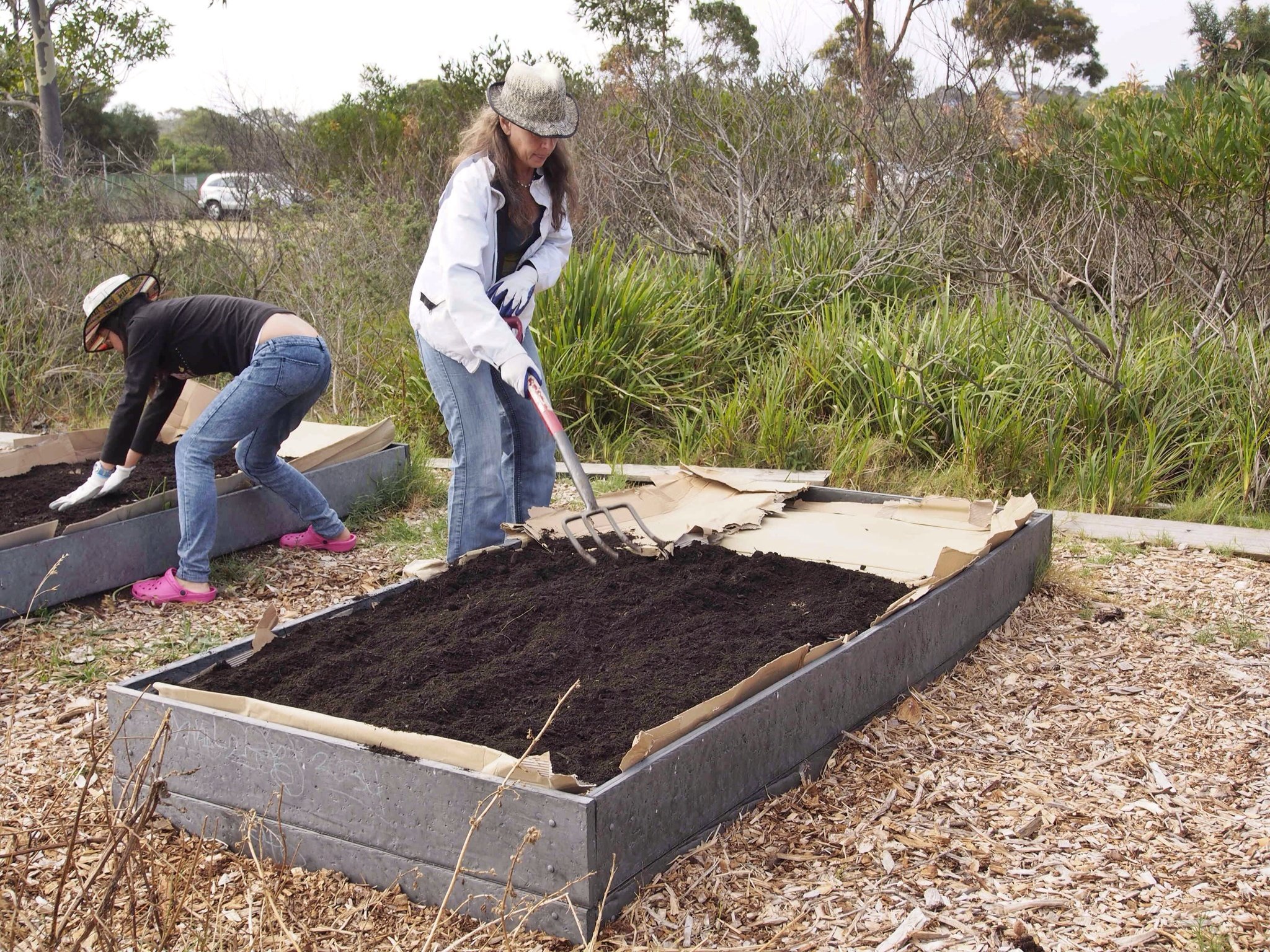
A weed barrier of cardboard (from cardboard boxes) was laid on top of the compost layer, the pieces well overlapped by around a third of their area so as to cover and shade the soil and deny growing space to weeds. The cardboard was folded so as to form a raised edge along the sides of the garden. This covers the soil more thoroughly and reduces growing space for weeds.
Newspaper, similarly well overlapped, can be used instead of cardboard though it may be becoming more difficult to find as people increasingly get their news on their digital devices rather than buying newspapers.
Over time, the speed dependent on local climatic factors like rainfall, heat and relative humidity as well as regularity of garden irrigation, the cardboard or newspaper will break down into organic matter. Some will be used by the plants as nutrients, the rest adding to the soil's moisture retention capacity.
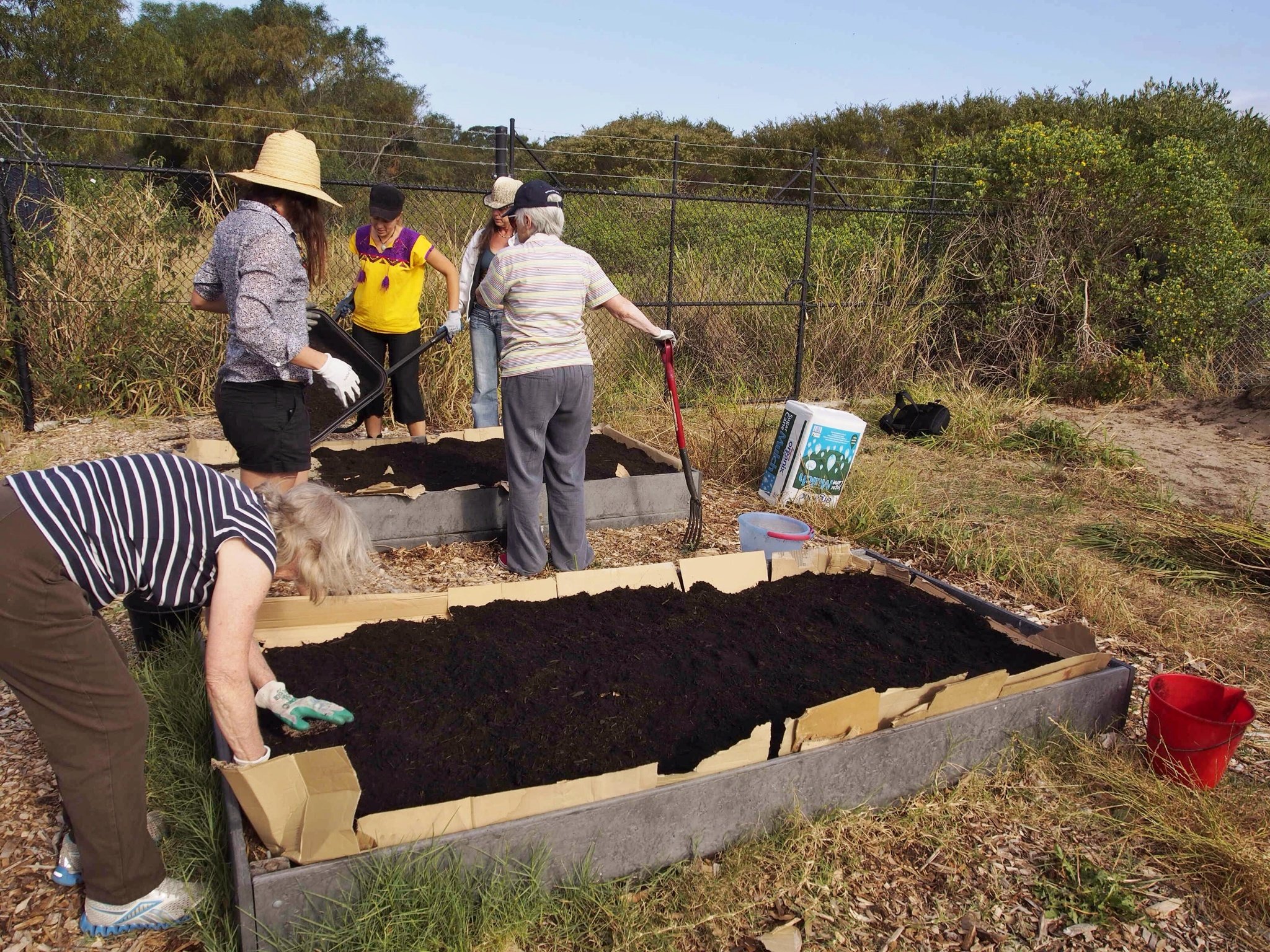
Students then wheelbarrowed loads of compost-rich soil and upended this onto the garden, spreading it into a thick layer.
The lesson was in making a no-dig garden that, just as a lasagne is made up of layers of different foods, the garden is made up of different layers of plant food and mulch.
There are other methods of making vegetable gardens that work well, such as the dig-and-loosen method where the soil is dug and turned to a spade depth and the soil level below is loosened with a garden fork so that air, water and moisture can penetrate. If the soil is compacted where you plan to make your garden it's a good idea to loosen it by pushing a garden fork in as far as it will go, then rocking it back and forth to loosen, but not turn, the soil.
The first thing to do was to clean out the garden, removing any opportunistic plants that had started to colonise the garden bed as well as remnant vegetables from the last class.
Next, a layer of compost a centimeter or so thick was spread over the soil surface to provide nutrients to the vegetables that would be planted. This was watered thoroughly.
Before this, the trainer suggested any participants with breathing difficulties, such a asthma, wear one of the dust masks provided to avoid breathing in fine particles from the compost and straw.
A weed barrier of cardboard (from cardboard boxes) was laid on top of the compost layer, the pieces well overlapped by around a third of their area so as to cover and shade the soil and deny growing space to weeds. The cardboard was folded so as to form a raised edge along the sides of the garden. This covers the soil more thoroughly and reduces growing space for weeds.
Newspaper, similarly well overlapped, can be used instead of cardboard though it may be becoming more difficult to find as people increasingly get their news on their digital devices rather than buying newspapers.
Over time, the speed dependent on local climatic factors like rainfall, heat and relative humidity as well as regularity of garden irrigation, the cardboard or newspaper will break down into organic matter. Some will be used by the plants as nutrients, the rest adding to the soil's moisture retention capacity.
Students then wheelbarrowed loads of compost-rich soil and upended this onto the garden, spreading it into a thick layer.
THE GARDEN
Choose a place that gets around five hours sunlight a day through the year to build your garden, and that's in reach of a tap to which you can attach a hose or at which you can fill a watering can.
The photo shows a raised garden of planks made of recycled, UV-stabilised plastic that does not leach chemicals into the soil and that already existed on-site, having been built some time ago as a temporary training garden and to trial the product. Because the garden receives no maintenance between courses, a raised garden reduces weed infestation.
Choose a place that gets around five hours sunlight a day through the year to build your garden, and that's in reach of a tap to which you can attach a hose or at which you can fill a watering can.
The photo shows a raised garden of planks made of recycled, UV-stabilised plastic that does not leach chemicals into the soil and that already existed on-site, having been built some time ago as a temporary training garden and to trial the product. Because the garden receives no maintenance between courses, a raised garden reduces weed infestation.