
Sign In
  • Log In
  • Register

Lost Your Password?

Registration is disabled

PacificEdge
  • Home
  • About
    • About PacificEdge
    • Get in touch
  • Blog
  • Journalism
    • PacificEdge on Medium
    • Permaculture journal on Medium
    • By Road & Track on Medium
    • Citizen journalism
    • Journal
    • Nomadics
    • The alt.food movement
    • A Tasmanian journey
    • Memoir
  • Permaculture
    • PERMACULTURE journal — Medium feed
    • Permaculture Papers
    • The Trainer Papers
    • Participatory techniques
  • Publications
    • PacificEdge papers
    • Policy related documents
    • TerraCircle publications
    • Storehouse photo essays
    • Adobe Spark photo essays
PacificEdge
  • Home
  • About
    • About PacificEdge
    • Get in touch
  • Blog
  • Journalism
    • PacificEdge on Medium
    • Permaculture journal on Medium
    • By Road & Track on Medium
    • Citizen journalism
    • Journal
    • Nomadics
    • The alt.food movement
    • A Tasmanian journey
    • Memoir
  • Permaculture
    • PERMACULTURE journal — Medium feed
    • Permaculture Papers
    • The Trainer Papers
    • Participatory techniques
  • Publications
    • PacificEdge papers
    • Policy related documents
    • TerraCircle publications
    • Storehouse photo essays
    • Adobe Spark photo essays
Sign In Add Listing
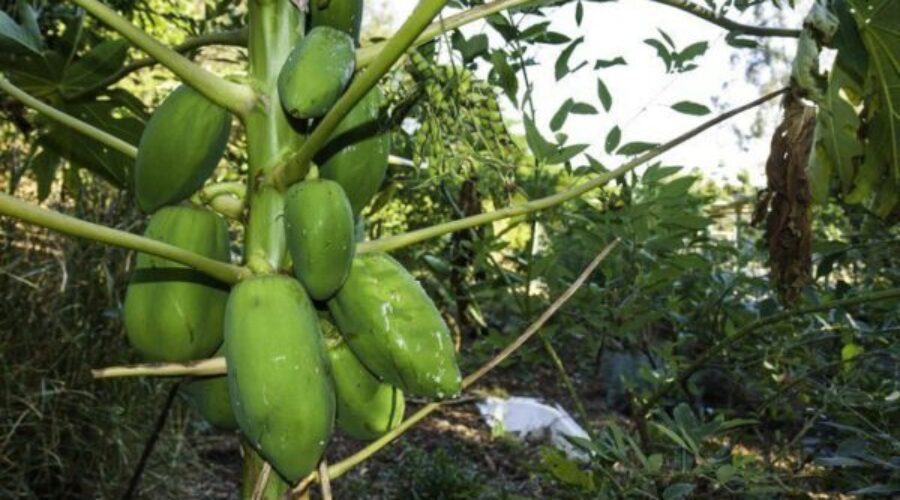
Pawpaw — another fast fruit

Pawpaw — another fast fruit

  • June 1, 2025June 1, 2025
  • Fruits

Photos and story by Russ Grayson

Common name: Pawpaw, papaya
Botanical name: Carica papaya

Growth form: A small, usually single-stem tree between 3-10 m of tropical, subtropical climates. The tree will grow in coastal warm temperate climates. Large, lobed, palmate-shaped leaves grow from the crown to around 50–70 cm in length. The fruit grows from the crown.

Reproduction: Seed.Centre of diversity: Central/northern South America.

Uses: Food.

Edible part: Fruit. The fruit is commonly eaten ripe, when it turns yellow. Green, immature fruit is shredded in salads.

Uses in community food garden design: Plant in the community garden’s food forest/tree cropping zone.

Pawpaw is another fast-fruit that grows to edible stage quickly. This enables it to be planted among slower-growing fruit and nut trees to make use of space until the slower-growing trees grow and shade it out. This is accelerated successional planting.

Grow pawpaw in clumps in a warm microclimate sheltered from strong, cold winds.

Notes: Pawpaw, banana, tamarillo and babaco are some of the fast-fruits that yield harvest well before slower growing fruit and nut species like the citrus, macadamia and avocado. They provide an early yield in new community gardens in appropriate climates.

  • Share
  • Share
  • Pin

Post navigation

Previous Post Black sapote — chocolate pudding fruit
Next Post Babaco — bit like a pawpaw but not quite

Leave a Reply

Your email address will not be published. Required fields are marked *

This site uses Akismet to reduce spam. Learn how your comment data is processed.

Contact us… Russ Grayson

View Profile

Journalist & photographer with media, international development and adventure equipment background. Media, adventure activities, writing, permaculture.

Send Message

Connect with us

Latest stories

  • Test blog posting
    July 18, 2026
  • Babaco — bit like a pawpaw but not quite
    June 1, 2025
  • Pawpaw — another fast fruit
    June 1, 2025
  • Black sapote — chocolate pudding fruit
    June 1, 2025
  • Bananas
    June 1, 2025

Journalist & photographer with media, international development and adventure equipment background. Media, adventure activities, writing, permaculture.

Visit my Medium site

Blogs:

  • PERMACULTURE journal
  • PacificEdge

Helpful Links

  • About PacificEdge
  • Get in touch
  • My Profile
© PacificEdge 2026
Hi! How can I help you?
AI Assistant
Expand chat Collapse chat
Start a new chat
Powered by PurioChat