
Sign In
  • Log In
  • Register

Lost Your Password?

Registration is disabled

PacificEdge
  • Home
  • About
    • About PacificEdge
    • Get in touch
  • Blog
  • Journalism
    • PacificEdge on Medium
    • Permaculture journal on Medium
    • By Road & Track on Medium
    • Citizen journalism
    • Journal
    • Nomadics
    • The alt.food movement
    • A Tasmanian journey
    • Memoir
  • Permaculture
    • PERMACULTURE journal — Medium feed
    • Permaculture Papers
    • The Trainer Papers
    • Participatory techniques
  • Publications
    • PacificEdge papers
    • Policy related documents
    • TerraCircle publications
    • Storehouse photo essays
    • Adobe Spark photo essays
PacificEdge
  • Home
  • About
    • About PacificEdge
    • Get in touch
  • Blog
  • Journalism
    • PacificEdge on Medium
    • Permaculture journal on Medium
    • By Road & Track on Medium
    • Citizen journalism
    • Journal
    • Nomadics
    • The alt.food movement
    • A Tasmanian journey
    • Memoir
  • Permaculture
    • PERMACULTURE journal — Medium feed
    • Permaculture Papers
    • The Trainer Papers
    • Participatory techniques
  • Publications
    • PacificEdge papers
    • Policy related documents
    • TerraCircle publications
    • Storehouse photo essays
    • Adobe Spark photo essays
Sign In Add Listing
Lemon myrtle a tasty tree

Lemon myrtle a tasty tree

  • May 30, 2025May 30, 2025
  • Bush foods

Photos and story by Russ Grayson

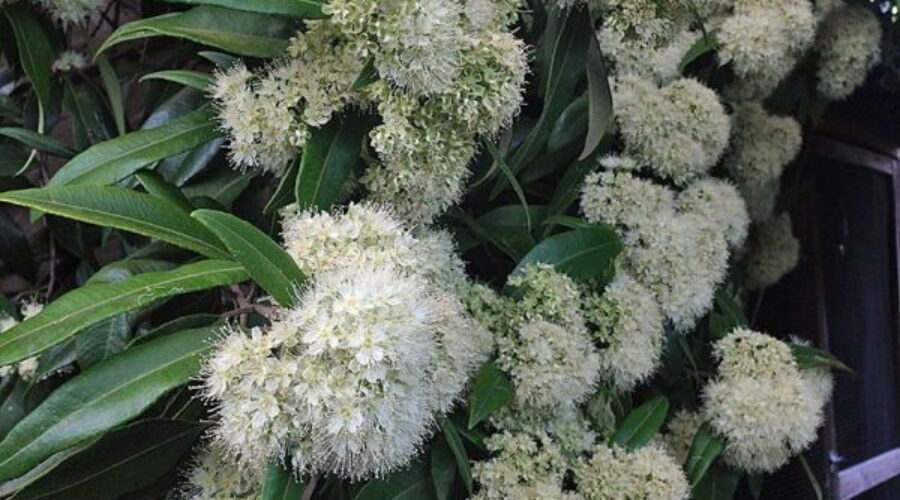
Lemon myrtle is an indigenous Australian tree for larger community or home gardens unless grown as a pruned specimen. Left to reach its full growth form it would be a suitable tree for urban parks.

As an Australian bush food, lemon myrtle could be gleaned where it occurs in the wild or public places, providing the gleaners’ ethics of taking only what is needed and not damaging the plant is followed.

The tree’s common name comes from the strong lemon aroma that emanates from its leaves when crushed.

In the community garden

Unless the lemon myrtle is pruned to maintain a reduced growth form, this is a tree for the larger community garden.

Locate it where it will not cast shade over plants requiring full sun, such as to the southwards of annual garden beds. Left to reach its full growth potential, lemon myrtle might find use as a shade tree with seating below when it reaches a suitable height.

This is a tree for the orchard area or for planting in sheltered corners of the community garden.

Common name: Lemon myrtle
Botanic name: Backhousia citriodora
Climate: Subtropical, warm temperate.

Growth form: Evergreen tree up to 20m in height though commonly smaller and growing perhaps to five metres in cultivation. Dense canopy. Slow growing. Two to three years to the flowering of small white blooms.

Centre of diversity: Australia.
Natural habitat: Coastal Queensland rainforest.
Useful part: Leaves, flowers.

Uses:

To give lemon flavour to food and food flavouring:

  • leaves and flowers are used in savoury dishes and to make a food dressing
  • made into a lemon-flavoured tea
  • add leaves toward the end of cooking as cooking reduces flavour
  • harder, older leaves used for food preparation
  • leaves can be dried and crushed.

Oil can be distilled and is used to scent perfumes, confectionery, and aromatherapy. It could have potential as a shade tree. It is reputed to repel insects.

Reproduction and cultivation:

Grow from seed and cuttings. Needs moderate watering. Prefers full sun and well-drained soils of neutral pH. Prefers sheltered sites. Can be pruned.

Disease susceptibility:

Myrtle rust.

  • Share
  • Share
  • Pin

Post navigation

Previous Post Lillypilly time
Next Post New Zealand spinach, Warragul greens

Leave a Reply

Your email address will not be published. Required fields are marked *

This site uses Akismet to reduce spam. Learn how your comment data is processed.

Contact us… Russ Grayson

View Profile

Journalist & photographer with media, international development and adventure equipment background. Media, adventure activities, writing, permaculture.

Send Message

Connect with us

Latest stories

  • Test blog posting
    July 18, 2026
  • Babaco — bit like a pawpaw but not quite
    June 1, 2025
  • Pawpaw — another fast fruit
    June 1, 2025
  • Black sapote — chocolate pudding fruit
    June 1, 2025
  • Bananas
    June 1, 2025

Journalist & photographer with media, international development and adventure equipment background. Media, adventure activities, writing, permaculture.

Visit my Medium site

Blogs:

  • PERMACULTURE journal
  • PacificEdge

Helpful Links

  • About PacificEdge
  • Get in touch
  • My Profile
© PacificEdge 2026
Hi! How can I help you?
AI Assistant
Expand chat Collapse chat
Start a new chat
Powered by PurioChat