
Sign In
  • Log In
  • Register

Lost Your Password?

Registration is disabled

PacificEdge
  • Home
  • About
    • About PacificEdge
    • Get in touch
  • Blog
  • Journalism
    • PacificEdge on Medium
    • Permaculture journal on Medium
    • By Road & Track on Medium
    • Citizen journalism
    • Journal
    • Nomadics
    • The alt.food movement
    • A Tasmanian journey
    • Memoir
  • Permaculture
    • PERMACULTURE journal — Medium feed
    • Permaculture Papers
    • The Trainer Papers
    • Participatory techniques
  • Publications
    • PacificEdge papers
    • Policy related documents
    • TerraCircle publications
    • Storehouse photo essays
    • Adobe Spark photo essays
PacificEdge
  • Home
  • About
    • About PacificEdge
    • Get in touch
  • Blog
  • Journalism
    • PacificEdge on Medium
    • Permaculture journal on Medium
    • By Road & Track on Medium
    • Citizen journalism
    • Journal
    • Nomadics
    • The alt.food movement
    • A Tasmanian journey
    • Memoir
  • Permaculture
    • PERMACULTURE journal — Medium feed
    • Permaculture Papers
    • The Trainer Papers
    • Participatory techniques
  • Publications
    • PacificEdge papers
    • Policy related documents
    • TerraCircle publications
    • Storehouse photo essays
    • Adobe Spark photo essays
Sign In Add Listing
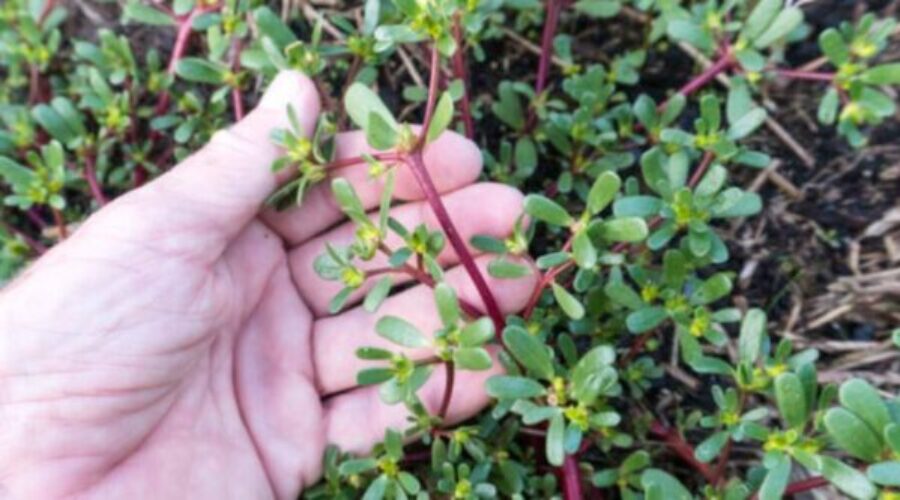
Purslane

Purslane

  • June 1, 2025June 1, 2025
  • Vegetable

Story and photos by Russ Grayson

Common name: Purslane
Botanical name: Portulaca oleracea, family Portulacaceae.
Growth form:

  • low-growing ground cover with thick, juicy leaves
  • annual succulent
  • a summer crop.

Reproduction: From seed.
Centre of diversity: Australasia, North Africa, Middle East, Indian subcontinent.

Uses: Eaten as a leaf vegetable fresh in a salad; stir-fried; cooked like spinach; because of its mucilaginous quality it also is suitable for soups and stews:
Australian Aborigines use the seeds to make seedcakes. 
Greeks fry the leaves and the stems with feta cheese, tomato, onion, garlic, oregano, and olive oil, add it in salads, boil it or add to casseroled chicken. 

Edible part: Stems, leaves and flower buds. Slightly sour and salty taste.

Uses in food garden design: 

  • food — contains omega-3 fatty acids
  • ground cover — to stabilise soils, reduce the erosive impact of heavy rain, retain soil moisture and shade soils to reduce high summer temperatures.

Notes: The plant is an archaeobotanical find at many prehistoric sites. Commonly regarded as a weed in Australia.

  • Share
  • Share
  • Pin

Post navigation

Previous Post Edible roots
Next Post French sorrel

Leave a Reply

Your email address will not be published. Required fields are marked *

This site uses Akismet to reduce spam. Learn how your comment data is processed.

Contact us… Russ Grayson

View Profile

Journalist & photographer with media, international development and adventure equipment background. Media, adventure activities, writing, permaculture.

Send Message

Connect with us

Latest stories

  • Test blog posting
    July 18, 2026
  • Babaco — bit like a pawpaw but not quite
    June 1, 2025
  • Pawpaw — another fast fruit
    June 1, 2025
  • Black sapote — chocolate pudding fruit
    June 1, 2025
  • Bananas
    June 1, 2025

Journalist & photographer with media, international development and adventure equipment background. Media, adventure activities, writing, permaculture.

Visit my Medium site

Blogs:

  • PERMACULTURE journal
  • PacificEdge

Helpful Links

  • About PacificEdge
  • Get in touch
  • My Profile
© PacificEdge 2026
Hi! How can I help you?
AI Assistant
Expand chat Collapse chat
Start a new chat
Powered by PurioChat